
Best Sewing Machines for Quilting: Picks for Beginners, Budget Buyers & Serious Quilters
Quilting is one of those crafts where the machine matters… but not in the way most people think. It’s not about owning the fanciest model with 600 decorative stitches. It’s about a machine that stays consistent through layers, handles bulky seams without drama, and gives you control when precision matters (like quilting lines, piecing accuracy, and free-motion work).
In this guide you’ll find our best quilting-friendly sewing machine picks, a fast comparison table, and a buying framework you can use to avoid overpaying. We’re also setting this page up for monetization with Amazon affiliate links (Tracking ID: deammart-20) and clear AdSense placements—without sacrificing readability.
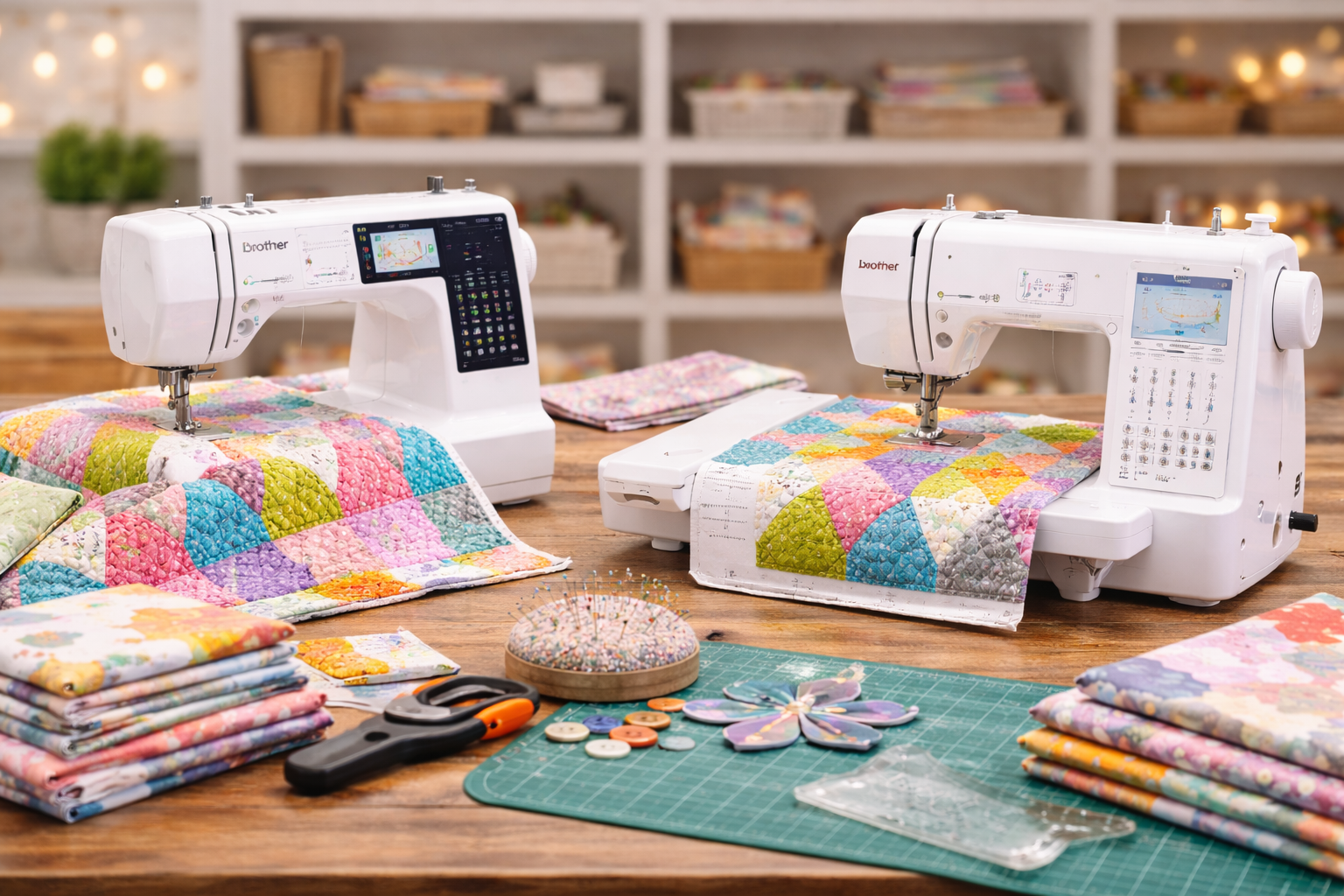
Best Sewing Machines for Quilting (Top Picks)
These picks cover the most common quilting paths: beginner-friendly computerized models, stronger “workhorse” machines for thick layers, and near-industrial straight-stitch machines for quilters who want speed and consistency. Each recommendation focuses on quilting outcomes: clean piecing, stable feeding, and comfortable control for long sessions.
1) Brother CS7000X — Best Overall Quilting Machine for Beginners (Value + Control)
For new quilters, control beats raw power. The Brother CS7000X is a widely recommended entry-level computerized option because it helps beginners stay accurate: speed control reduces “runaway stitches,” stitch selection is simple, and it supports quilting accessories like a walking foot (depending on your kit and setup). It’s a great “learn quilting without fighting the machine” choice.
Pros
- Speed control helps consistent piecing
- Easy stitch selection and learning curve
- Strong value: a “starter quilting machine” you can keep
Cons
- Limited throat space vs premium quilting machines
- Not designed for heavy upholstery or leather
Affiliate link. Great first quilting machine if you want control + ease.
2) Brother PQ1600S (or Similar High-Speed Straight-Stitch) — Best “Step Up” for Serious Quilters
Many quilters eventually discover a truth: for piecing and straight-line quilting, a strong straight-stitch machine can feel incredible. High-speed straight-stitch machines (like the Brother PQ-style category) are built to stitch consistently for long sessions. They’re not about fancy stitch menus. They’re about speed, stability, and “workshop feel.”
3) JUKI TL-2010Q (or Similar TL-Series) — Best Near-Industrial Quilting Workhorse
If you want a machine that feels like it belongs in a serious quilting room, the JUKI TL-series style is a classic recommendation. These machines are known for strong straight stitching, stability, and performance during long quilting sessions. They’re particularly loved by quilters who do lots of piecing, straight-line quilting, and structured projects that demand consistency.
Pros
- Excellent stitch consistency for piecing
- Stable feel for long sessions
- Great for quilts, bags, and home décor
Cons
- Straight-stitch focused (not a decorative-stitch machine)
- Higher price than entry-level quilting options
Affiliate link. This is the “serious quilter upgrade” category.
4) Janome HD-Style Mechanical Platforms — Best Stable Mechanical Option for Quilting + Thick Layers
Some quilters want a mechanical machine that’s stable, smooth, and reliable—especially if they also sew thick quilts, bindings, and occasional canvas projects. A sturdy mechanical platform can be a great quilting partner when paired with the right quilting feet. It’s also a strong choice for quilters who prefer “simple dials, fewer menus.”
Check Price on AmazonLearn the brand landscape: Janome Sewing Machine Guide.
5) A Mid-Range Computerized Quilting-Friendly Machine — Best “One Machine for Everything” Quilting Choice
If you quilt but also sew garments, home décor, and repairs, a mid-range computerized machine is often the best “one machine” choice. It can deliver quilting control (speed control, consistent stitches, sometimes needle up/down) while still providing zigzag, stretch stitches, and buttonholes. If you want versatility without giving up quilting comfort, start in this category.
For our broader list of strong computerized options, see: Best Computerized Sewing Machines.
Browse Quilting-Friendly Computerized MachinesQuick pick based on your quilting style
New to quilting? Start with an easy computerized machine with speed control. Quilting weekly and piecing a lot? Consider a straight-stitch specialist. Want one machine for quilting + garments? Go mid-range computerized.
Comparison Table (Fast Overview)
This table helps you shortlist quickly. The key is matching the machine to your quilting “reality”: small quilts vs bed quilts, occasional quilting vs weekly projects, and piecing-only vs free-motion quilting.
| Pick | Best For | Type | Quilting Strengths | Tradeoffs |
|---|---|---|---|---|
| Brother CS7000X | Beginners + casual quilters | Computerized | Speed controlEasy learning | Smaller throat not for heavy upholstery |
| Brother PQ1600S-style | Frequent piecing | Straight-stitch | ConsistencyHigh speed | Less stitch variety |
| JUKI TL-2010Q-style | Serious quilting sessions | Semi-industrial | StabilityWorkshop feel | Straight-stitch focus |
| Janome HD-style mechanical | Thick layers + binding | Mechanical | Stable platformDurable feel | Fewer automation features |
| Mid-range computerized | Quilting + garments | Computerized | VersatileConvenient | Quality varies avoid ultra-cheap models |
What Makes a Sewing Machine “Quilting-Friendly”?
Any sewing machine can technically sew a quilt. The question is: will it be enjoyable and consistent—especially on larger quilts? Quilting becomes dramatically easier when the machine gives you room to maneuver and consistent feeding through layers. Here are the true “quilting-friendly” qualities.
Quilting-friendly usually means:
- Throat space (more room for quilt bulk)
- Consistent stitches through layers
- Walking foot support for straight-line quilting
- Speed control for accuracy
- Stable feeding and smooth fabric movement
Not quilting-friendly (common issues):
- Vibrates or “runs away” at speed
- Struggles with thick batting seams
- Too little workspace for bed quilts
- Limited control for free-motion quilting
- Hard to see stitching area / poor lighting
Quilting Features That Actually Matter (Buyer’s Checklist)
If you only read one section, read this. These are the features that make quilting smoother and more accurate. You do not need all of them. But the more you quilt, the more you’ll appreciate them.
- Throat space: More room to the right of the needle = easier maneuvering of bulky quilts. This matters most for bed quilts.
- Walking foot compatibility: Helps move the top layer in sync with the bottom feed dogs—reducing shifting and puckers.
- Speed control: Lets you cap the top speed so you can quilt precisely without “panic stitching.”
- Needle up/down (if available): A huge convenience for pivoting and stopping with precision.
- Extension table: Adds surface area to support quilt weight and reduces drag.
- Good lighting + visibility: Quilting accuracy improves when you can actually see your seam line and stitch path.
- Stable feeding through layers: A calm, stable machine produces cleaner quilting lines and fewer skipped stitches.
- Free-motion capability: You’ll want a darning/free-motion foot and the ability to drop or cover feed dogs.
If you’re still deciding between machine types, this internal guide is the best next click: Mechanical vs Computerized Sewing Machines.
How We Test & Rank Quilting Machines
This page follows a practical, buyer-first review approach (in the spirit of the Edward Eugen style): focus on what changes ownership and results—not what looks impressive in a spec list. Quilting tests should reflect real quilts: layers, batting seams, long straight lines, and time spent at the machine.
Our ranking criteria
- Layer handling: Can it quilt through seams, batting, and backing without stalling or skipping?
- Feeding behavior: Does the top layer drift? Does the stitch length stay consistent?
- Control: Is it calm at slow speeds? Are pivots and stops easy?
- Comfort for long sessions: Visibility, workspace, and general “friction” while quilting.
- Value: Does the price make sense for the quilting performance you get?
Best Sewing Machine for Quilting by Style (Pick Your Path)
Best for beginners learning piecing + small quilts
New quilters need control and low frustration. A beginner-friendly computerized machine with speed control is often the best start: you can piece accurately, practice quilting lines, and build confidence without the machine “running away.”
See Beginner Quilting Pick on AmazonBest for straight-line quilting on larger quilts
Straight-line quilting becomes easier when the machine stays stable and your quilt glides smoothly on the table. An extension table, good lighting, and stable feeding matter. Many quilters also love straight-stitch specialists here, because consistency is the whole game.
Explore Near-Industrial Quilting WorkhorsesBest for free-motion quilting (FMQ)
FMQ demands control: smooth starts and stops, the ability to drop/cover feed dogs, and good visibility. A machine with speed control (and ideally needle up/down) makes FMQ practice far less frustrating. If you’re FMQ-focused, prioritize control and workspace over stitch count.
Browse FMQ-Friendly MachinesBest “one machine” choice for quilting + garments
If you quilt and also sew clothing, you’ll appreciate zigzag and stretch stitches, buttonholes, and convenience features. That’s where a mid-range computerized machine shines. It’s rarely the absolute best at any single thing, but it’s excellent at being useful. Start with: Best Computerized Sewing Machines.
Best for quilters who also sew thicker materials
If you quilt but also do denim hems, canvas bags, or thick binding stacks, a heavy-duty-friendly machine can reduce skipped stitches and keep the machine stable. See: Best Heavy Duty Sewing Machines.
Needles, Feet & Setup for Better Quilting (This Matters More Than People Think)
Many quilting frustrations aren’t the machine—they’re the setup. The right needle, the right foot, and a few small habits can make your stitches cleaner and your quilting lines straighter.
Quilting feet you’ll actually use
Walking foot (even feed foot)
- Helps prevent top-layer shifting
- Great for straight-line quilting
- Helpful for binding and long seams
Free-motion / darning foot
- For FMQ designs and stippling
- Requires feed dogs dropped/covered
- Practice + speed control makes a big difference
Needle choices (simple rule)
- Universal needle: good general choice for cotton quilting fabrics (start here).
- Quilting needle: designed for quilting cotton and layered work (nice upgrade).
- Topstitch needle: useful for thicker thread or crisp stitch definition.
Thread + tension basics
Quilting loves consistency. Use a quality thread and a fresh needle. If your stitches look uneven, don’t panic-adjust tension immediately. First: rethread top and bobbin, change the needle, and test on a scrap “quilt sandwich” (top + batting + backing). Those three steps solve a surprising number of issues.
External learning resources: National Quilters Circle and AllPeopleQuilt. Needle guidance: SCHMETZ Needles.
Beginner Quilting Plan: Your First Month (So You Don’t Quit)
Most new quilters don’t fail because quilting is too hard. They fail because they try to quilt a full bed quilt on day one. Here’s a simple 4-week plan that builds skills and confidence fast—without overwhelming your machine or your patience.
Week 1: Piecing basics
- Practice straight seams and consistent seam allowance.
- Make a simple patchwork block (e.g., 9-patch).
- Focus on accuracy, not speed.
Week 2: Quilt sandwich + straight-line quilting
- Make a small quilt sandwich (placemat size).
- Use a walking foot for straight lines.
- Learn to manage fabric drag (support the quilt, don’t pull it).
Week 3: Binding practice
- Bind a small project (it’s the fastest way to learn).
- Practice corners and consistent edge stitching.
- Try a slightly thicker sandwich to build confidence.
Week 4: Intro to free-motion (optional)
- Practice loops or meanders on scraps.
- Use speed control if your machine has it.
- Don’t chase perfection—chase consistency.
Need help choosing a machine after reading this?
Use these internal guides to pick the best machine for your actual projects:
FAQs: Best Sewing Machines for Quilting
What features matter most in a quilting sewing machine?
Prioritize throat space, stitch consistency through layers, speed control, walking foot support, and good workspace (extension table). Needle up/down (if available) also helps a lot for pivoting and stopping precisely.
Do I need a quilting-specific machine to quilt?
Not always. Many standard machines can quilt small projects. Quilting-specific features matter most for larger quilts, thicker batting, and long-session comfort. If you quilt occasionally, start with a good beginner or mid-range machine.
Is a computerized or mechanical machine better for quilting?
Both can work. Computerized machines often offer speed control and more precise settings, which help accuracy. Mechanical machines can be very durable and excellent for straight-line quilting, especially with a walking foot. Compare types here: Mechanical vs Computerized.
What’s the best quilting machine for beginners?
Many beginners do best with an entry-level computerized machine that includes speed control and supports quilting accessories. It reduces fear, improves accuracy, and keeps learning enjoyable.
What’s the biggest mistake new quilters make when choosing a machine?
Buying based on stitch count instead of quilting comfort. Quilting is about workspace, control, and feeding through layers. A machine with fewer stitches but better control often produces better quilting results.
Final Verdict
The best sewing machine for quilting is the one that matches your quilting habits. If you’re new, start with a machine that makes learning comfortable: speed control, easy setup, and walking foot support. If you quilt weekly and piece a lot, you’ll love a straight-stitch specialist that delivers stability and consistency for long sessions. And if you want one machine for quilting plus garments and home sewing, a quality mid-range computerized machine is often the smartest long-term choice.
Next steps (internal links that build authority)
Use these pages to strengthen your site’s internal linking and help readers make a confident purchase decision.
External references (learn more): Quilting education: National Quilters Circle, AllPeopleQuilt. Needle info: SCHMETZ Needles.