Best Sewing Machines for Beginners: Easy, Reliable Picks (Plus the Buying Guide New Sewists Need)
Buying your first sewing machine can feel weirdly intimidating. Every brand claims “beginner-friendly.” Every listing looks similar. And yet—some machines make learning enjoyable, while others turn sewing into a jam-filled frustration festival.
This guide is designed to prevent beginner regret. We’ll recommend the best beginner sewing machines by use-case (budget, quilting, basic alterations, and “I want the machine to help me”), explain which features actually matter, and show you the common mistakes that cause thread breaks and bird’s nests. We’ll also include smart internal links around SewingMachineGuides.com and monetization-ready Amazon links using Tracking ID: deammart-20.
Best Sewing Machines for Beginners (Top Picks)
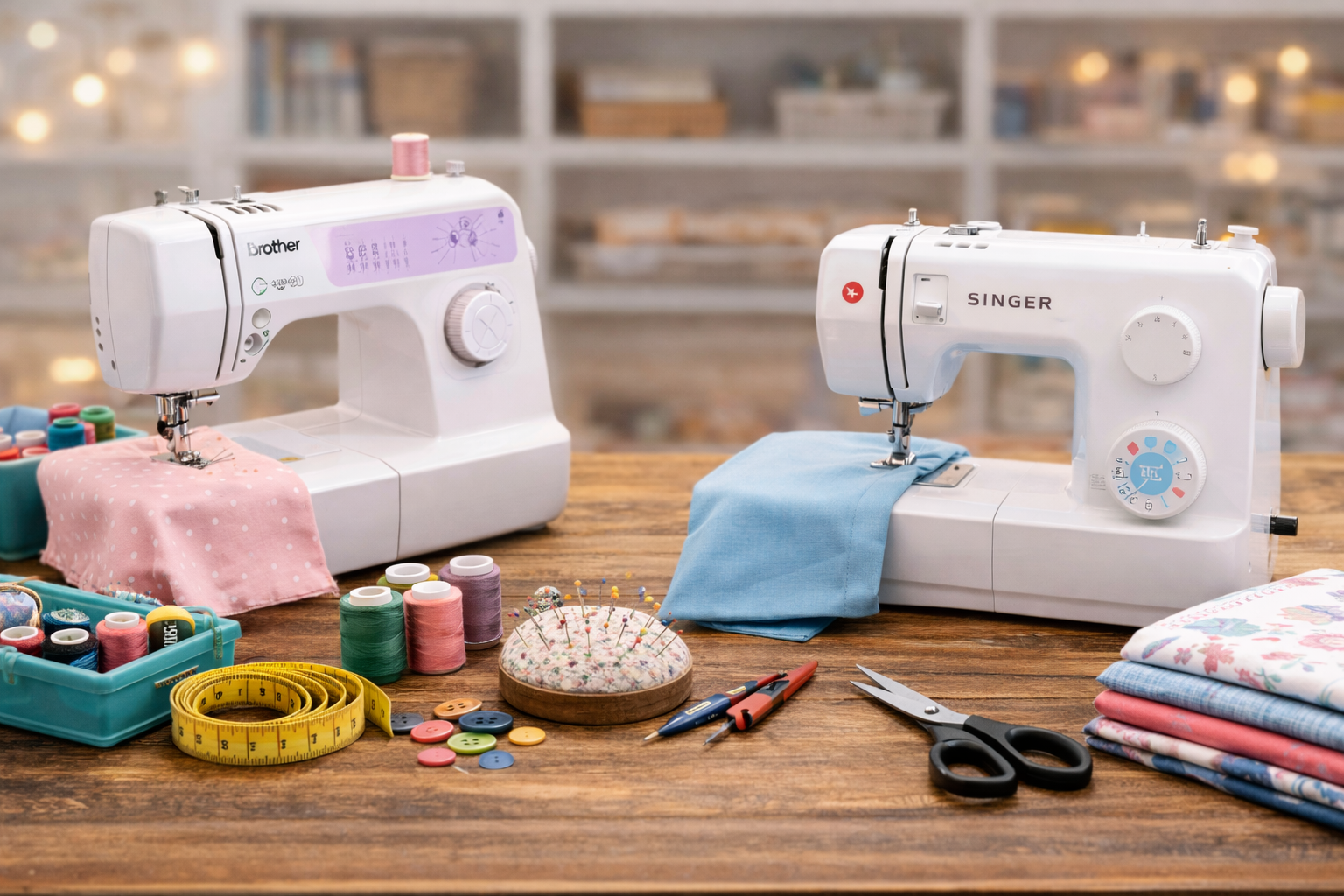
These picks are selected for beginner success: easy setup, stable stitching, and features that reduce frustration. We also include “who should skip it” notes to help you avoid mismatches.
1) Brother CS7000X — Best Overall Beginner Computerized Sewing Machine
If you want the easiest learning experience, the Brother CS7000X is a standout. It’s widely chosen as a beginner-friendly computerized machine because it combines a clear interface with practical features like speed control and an automatic needle threader. It’s also flexible enough that you won’t outgrow it immediately.
Pros
- Speed control slider (huge for beginners)
- Easy stitch selection via screen
- Great value for features
Cons
- Not designed for heavy leather or thick upholstery
- Lightweight (use a stable table)
Affiliate link. Great beginner pick if you want the machine to “help” you.
2) SINGER Heavy Duty (44xx Series) — Best Beginner Pick for Thick Fabrics (Budget Workhorse)
Many beginners don’t start with delicate quilting—they start with practical jobs: hemming jeans, repairing seams, and making sturdy household items. A heavy duty mechanical machine can be a better beginner choice for those projects because it offers strong “punch” and a straightforward interface.
Check Price on AmazonIf heavy fabrics are your priority, also see: Best Heavy Duty Sewing Machines.
3) Janome HD / Easy-Mechanical Style Models — Best “Buy Once” Beginner Mechanical Choice
Some beginners want a machine that feels stable, durable, and “grown-up,” without needing a digital interface. Janome’s mechanical platforms are often praised for smooth operation and long-term reliability. If you want to learn fundamentals and keep the machine for years, this category is worth considering.
Check Price on AmazonBrand guide: Janome Sewing Machine Guide
4) Brother SE1900 (or Similar Combo) — Best Beginner Choice If You Want Embroidery Too
If you suspect you’ll want embroidery later, consider starting with a sewing + embroidery combo. It costs more upfront, but it can save you from buying a second machine in a year. Combo machines are great for beginners who love personalization, monograms, patches, and gifts.
Check Price on AmazonThis is a “future-proof” beginner choice if embroidery is likely.
5) A “Quilting-Friendly” Beginner Option — Best for Beginners Who Want to Quilt
Quilting beginners should prioritize workspace, stability, and stitch control over decorative stitch count. A machine that lets you control speed and pivot cleanly will make quilting far more enjoyable. We maintain a dedicated list for this: Best Sewing Machines for Quilting.
Browse Beginner Quilting Machines on AmazonIf quilting is your main goal, use the dedicated quilting guide above for a better shortlist.
Want an even faster pick?
If you want the easiest learning experience: choose an entry-level computerized machine with speed control. If you want thick-fabric repairs: choose a heavy duty mechanical machine. If you want long-term stability: choose a durable mechanical platform.
Comparison Table (Fast Overview)
Use this table to narrow your shortlist. Then read the “Beginner Features” and “Common Mistakes” sections— those two parts will save you the most frustration in week one.
| Pick | Best For | Type | Why Beginners Like It | Who Should Skip |
|---|---|---|---|---|
| Brother CS7000X | General beginners | Computerized | Speed controlEasy stitches | Users focused on heavy leather/upholstery |
| SINGER Heavy Duty 44xx | Denim & repairs | Mechanical | Punch powerSimple | Decorative stitch lovers |
| Janome mechanical HD-style | Stability & longevity | Mechanical | SmoothStable | Users who want “guided” digital settings |
| Brother SE1900 (combo) | Sew + embroidery | Computerized combo | Future-proofHigher cost | Strict budgets |
| Quilting-friendly beginner | New quilters | Varies | ControlWorkspace | People who only do quick repairs |
How We Rank Beginner Sewing Machines (What Actually Matters)
A beginner sewing machine should reduce friction and make you want to practice. You’re not trying to produce couture on day one—you’re trying to build confidence. That’s why we prioritize features that prevent the classic beginner pain points: threading mistakes, speed control problems, and tension confusion.
Our beginner scoring categories
- Ease of threading: clear thread path, simple bobbin handling, and an auto needle threader (ideally).
- Speed control & stability: a machine that behaves calmly at slow speeds is gold.
- Stitch consistency: fewer “why is it doing that?” moments.
- Useful stitches: straight, zigzag, stretch stitches, and a decent buttonhole.
- Value + outgrow risk: enough capability that you won’t need a new machine immediately.
If you want the complete framework for choosing (budget, brands, features, and use-cases), go here: How to Choose a Sewing Machine.
Beginner Features That Actually Matter (Ignore the Marketing Noise)
Beginner-friendly doesn’t mean “has 200 stitches.” It means the machine makes your first month easier. Here are the features that provide the biggest real-world payoff.
1) Speed control (the #1 confidence booster)
Beginners often struggle because the machine feels too fast. A speed control slider lets you cap the top speed, so your foot pedal becomes less scary. It also improves accuracy for curves, corners, and topstitching.
2) Easy bobbin system
A simple bobbin design reduces jams and makes troubleshooting easier. If you can see the bobbin and thread path clearly, you’ll fix problems faster—and you’ll sew more instead of searching forums.
3) Automatic needle threader
This is a small feature that feels like a superpower when you’re learning. It saves time, reduces eye strain, and makes sewing sessions feel smoother.
4) One-step buttonhole (optional but nice)
If you plan to sew garments, a one-step buttonhole is a big quality-of-life upgrade. Mechanical machines can still do buttonholes, but computerized machines often produce more consistent results.
5) Clear stitch selection (so you actually use the machine)
Beginners do best when the machine is intuitive. If stitch selection feels confusing, you’ll avoid exploring, and your learning slows down. This is where many entry-level computerized machines shine.
Mechanical vs Computerized for Beginners: Which Is Better?
This is one of the most common beginner questions—and the answer is simpler than people think: if you want guided ease and smoother workflow, go computerized. If you want simplicity, ruggedness, and learning fundamentals, go mechanical.
Choose a mechanical machine if you:
- Prefer simple dials and fewer electronics
- Want strong value for repairs and basic projects
- Enjoy learning fundamentals hands-on
- Don’t care about decorative stitch variety
Choose a computerized machine if you:
- Want speed control and guided settings
- Plan to sew often (weekly or more)
- Want easier buttonholes and consistent stitches
- Like convenience features (start/stop, needle up/down on some models)
For the full deep-dive, use our dedicated page: Mechanical vs Computerized Sewing Machines.
Best Beginner Sewing Machine by Project Type
Beginners doing basic repairs and hemming
If your main goal is basic repairs, hemming pants, and household fixes, you can choose a simple mechanical machine and learn fast. Stability and ease of threading matter more than stitch variety.
Browse Beginner Mechanical MachinesBeginners who want to sew garments
Garments are where buttonholes and consistent stitching matter. A beginner-friendly computerized machine usually makes garment learning smoother. If garments are your plan, start with the Brother CS-style category or similar.
Browse Beginner Computerized MachinesBeginners who want to quilt
Quilting requires control and stability. Workspace and consistent stitches matter more than decorative stitch count. Use our dedicated guide: Best Sewing Machines for Quilting.
Beginners sewing thick fabrics (denim, canvas)
If thick fabrics are your priority, a heavy duty mechanical machine can reduce frustration. See our heavy-duty guide: Best Heavy Duty Sewing Machines.
Common Beginner Mistakes (And the Fixes That Actually Work)
1) Thread “bird’s nest” under the fabric
This is usually caused by incorrect top threading, the presser foot being down while threading, or the bobbin being inserted incorrectly. Rethread the top with the presser foot up, and make sure the thread is seated in the tension discs.
2) Skipped stitches
Skipped stitches are often caused by the wrong needle type, a dull needle, or sewing too fast on tricky fabrics. Swap to a fresh needle and match it to your fabric (ballpoint for knits, denim needle for thick woven fabrics).
3) Thread breaking
Thread can break from tension issues, poor thread quality, a damaged needle, or incorrect threading. Use quality thread and double-check your thread path. Beginners underestimate how much cheap thread causes problems.
4) Fabric pulling into the needle plate
This happens most often with thin fabrics. Use a stabilizer, start a little in from the edge, or use a leader scrap. Also make sure you’re not pushing/pulling fabric—let the feed dogs do the work.
Beginner Starter Kit (Smart Add-ons That Make Sewing Easier)
You don’t need a huge kit. You need a few items that prevent frustration and improve results.
- Quality needles: universal + ballpoint + denim needles.
- Quality thread: avoid ultra-cheap thread bundles.
- Seam ripper: you will use it (everyone does).
- Fabric scissors or rotary cutter: clean cuts = easier sewing.
- Measuring tape + clips/pins: accuracy improves confidence.
External learning resources: Threads Magazine and Seamwork.
FAQs: Beginner Sewing Machines
What is the best sewing machine for a complete beginner?
The best beginner sewing machine is easy to thread, stable at slower speeds, and includes beginner-friendly features like an automatic needle threader and clear stitch selection. Many beginners prefer an entry-level computerized machine because it reduces setup confusion.
Should beginners buy a mechanical or computerized sewing machine?
Beginners who want the easiest experience usually prefer computerized machines (guided settings and speed control). Beginners who want simpler internals and a hands-on learning process may prefer mechanical machines. Use our deep-dive: Mechanical vs Computerized.
How much should a beginner spend on a sewing machine?
Many beginners succeed with entry to mid-range machines. Spending a bit more for stability and speed control can reduce frustration. The best budget depends on how often you’ll sew and what you’ll make (repairs vs garments vs quilting).
Do beginners need lots of stitches?
No. Most beginners use straight stitch, zigzag, a stretch stitch (optional), and a buttonhole. Comfort features (easy threading, speed control) are usually more important than 200 decorative stitches.
Final Verdict
If you want the smoothest learning experience, start with a beginner-friendly computerized machine that includes speed control and easy stitch selection. If you want to focus on practical repairs and thicker fabrics, a heavy-duty mechanical machine is often the smartest value. And if you want long-term stability with fewer “feature distractions,” a durable mechanical platform can be a great teacher.
Next step: pick the right machine for your goals
Use these internal guides to decide fast and build an authority silo on SewingMachineGuides.com.
External resources: For sewing education and technique references, explore Threads Magazine, Seamwork, and needle guidance at SCHMETZ Needles.